

Kyoto’s winter chill slowly begins to ease in February, and by late in the month, plum blossoms start to appear across the city. Blooming in the crisp cold air, the plum tree is always the first to signal that spring is on its way. Here are 2 spots we’d recommend visiting this time of year!
1. Kitano Tenmangu — Baika Festival & Plum Garden
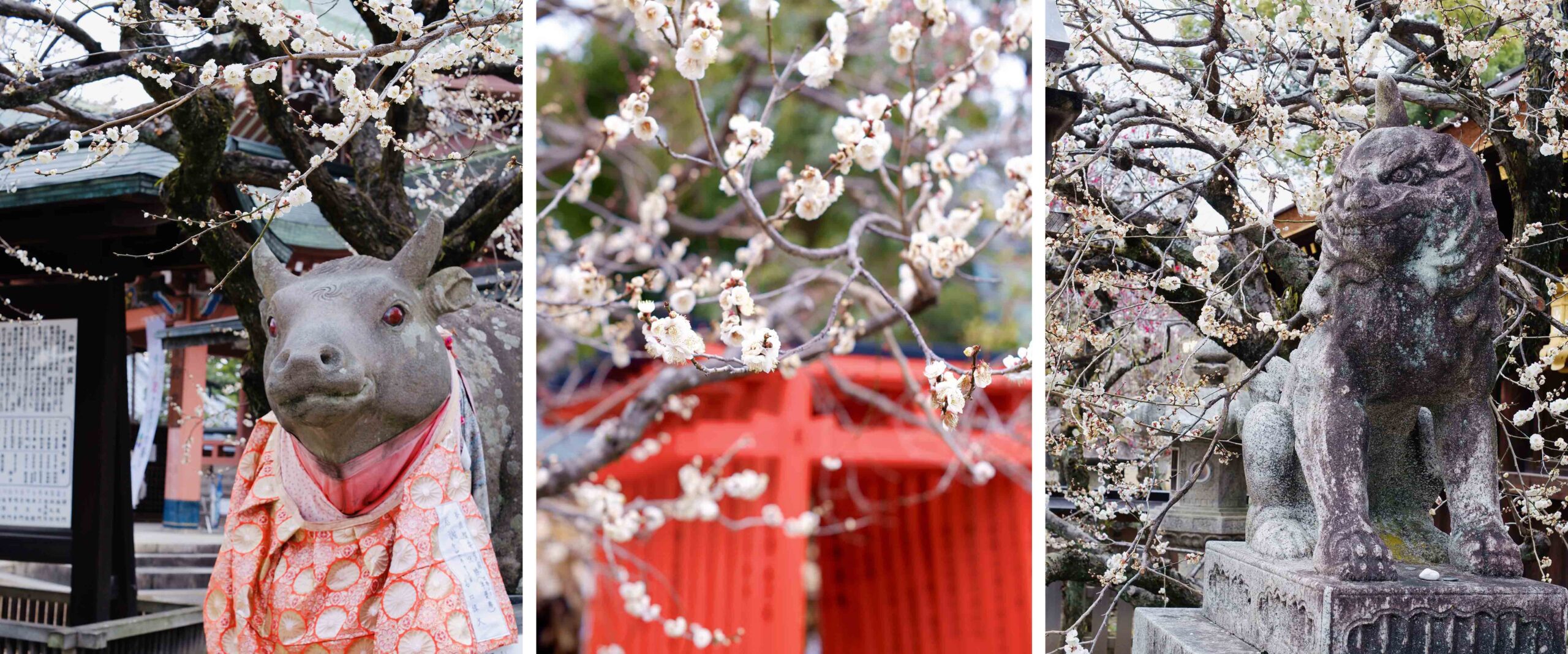
Affectionately known around the city as “Tenjin-san,” Kitano Tenmangu is the head shrine of Tenmangu shrines across Japan, dedicated to Sugawara no Michizane, the deity of learning and scholarship. Michizane was famously devoted to the plum blossom, and the shrine’s grounds reflect that with around 1,500 plum blossom trees!
On February 25th, the anniversary of Michizane’s passing, the shrine holds its annual Baika Festival. Traditional tea ceremonies are held beneath the blossoming trees and it gets quite popular, so it’s worth planning ahead.
Outside of the festival, the plum garden is open to the public from February 1st through May 24th (9:00–20:30). If you have the flexibility, we’d recommend timing your visit for the evening, when the garden is lit up after dark, and it feels like an entirely different place.
Getting here from THE MACHIYA EBISUYA HOTEL (Approx. 30 minutes)
– Walk about 10 minutes to the Shijo Takakura bus stop
– Take the No. 203 city bus to “Kitano Tenmangu-mae” stop
2. Jonangu Shrine — Weeping Plum & Camellia Festival
We also recommend Jonangu, one of Kyoto’s 5 guardian shrines, each protecting a different direction of the city. Jonangu watches over the southern area of Kyoto. It has a quieter, more local feel compared to some of the more well-known spots, but at this time of year it draws a lot of attention as many people from all over the country come to see the plum blossoms.
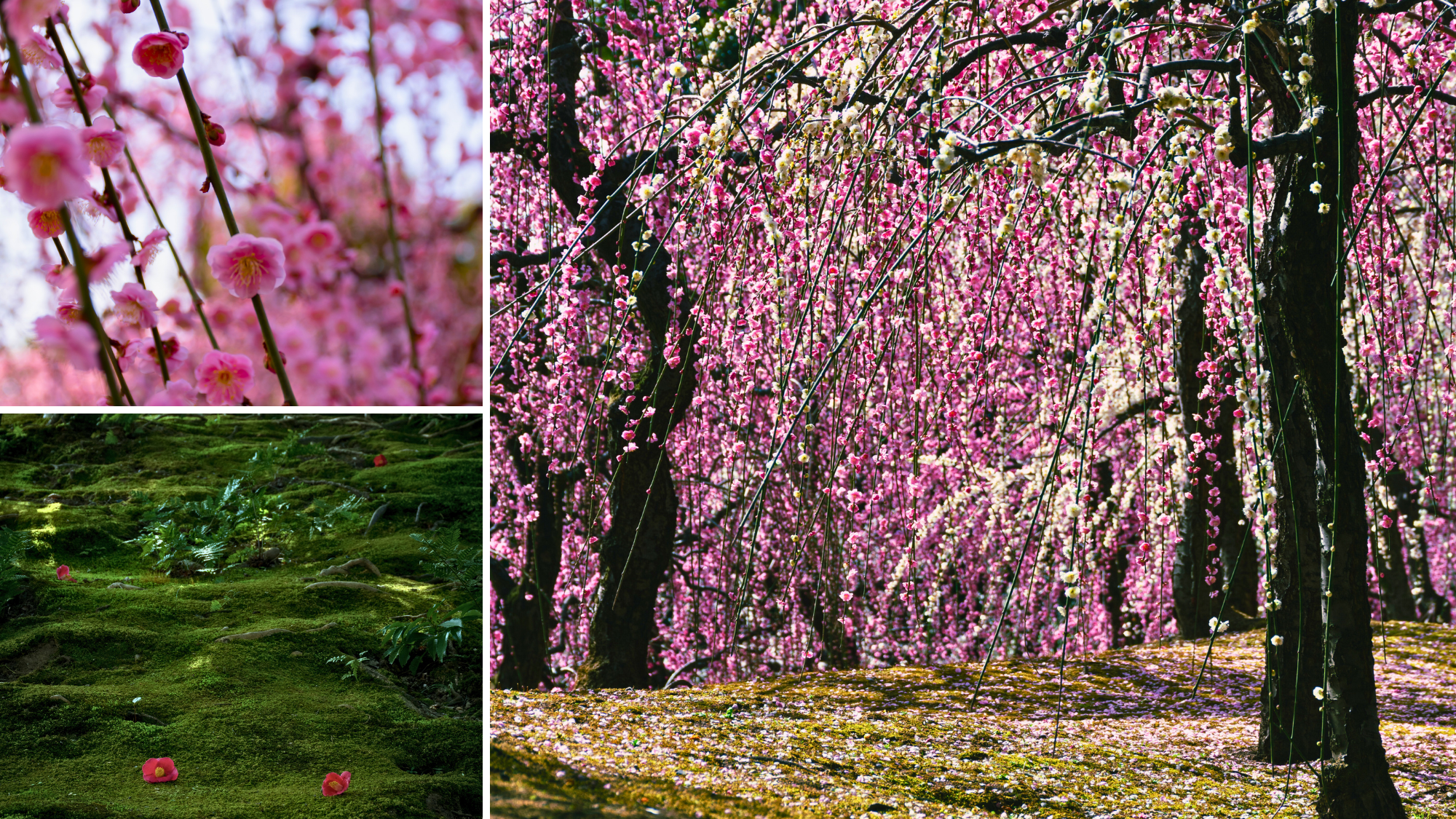
From February 18th through March 22nd, the shrine holds its Weeping Plum & Camellia Festival. The star of the show is the shidaraume (weeping plum trees), and deep red camellias. It’s a striking contrast and a completely different mood from Kitano Tenmangu’s more composed elegance.
– Opening hours are 9:00–16:30 (last entry 16:00).
Getting here from THE MACHIYA EBISUYA Hotel:
– Walk about 10 minutes to Shijo Station on the Karasuma subway line
– Take the subway to Takeda Station.
– Walk for approximately 17-minute walk to the shrine, or take a 10 minute taxi ride.