Every machiya began as a working building, and that purpose is still visible at the front door. The misenoma (店の間, mi-se-no-ma), or “shop room,” is the first space you meet when you step in from the street, and it was where a merchant family earned its living.
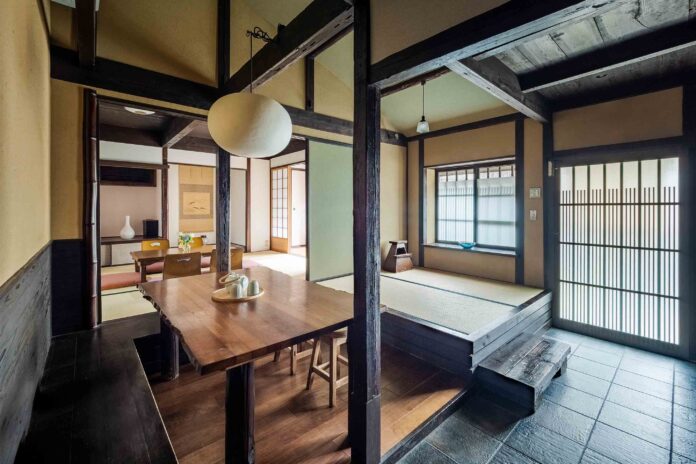
What is a Misenoma?
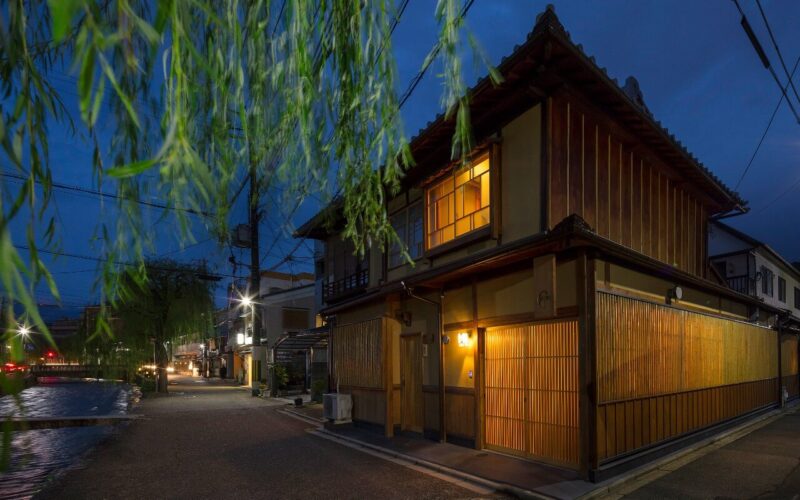
Most Kyoto machiya were both home and business, housing merchants, weavers, and craftspeople. The misenoma sat directly behind the wooden lattice facade (koshi), facing the street. In some houses, hinged wooden shutters (shitomi) lifted during the day to open the shopfront to passersby, while a noren curtain at the entrance announced what was sold inside. Customers were welcomed here, goods were shown, and deals were made, while the family’s private rooms stayed farther back along the unagi no nedoko floor plan.
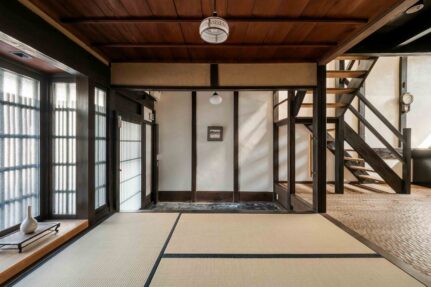
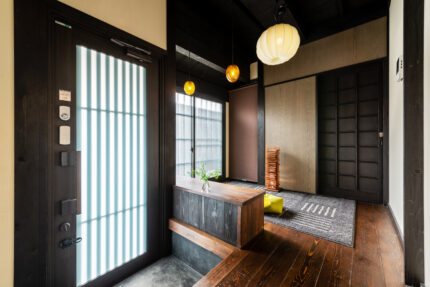
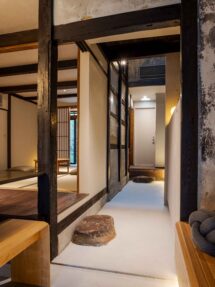
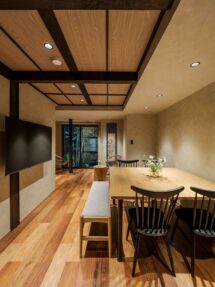
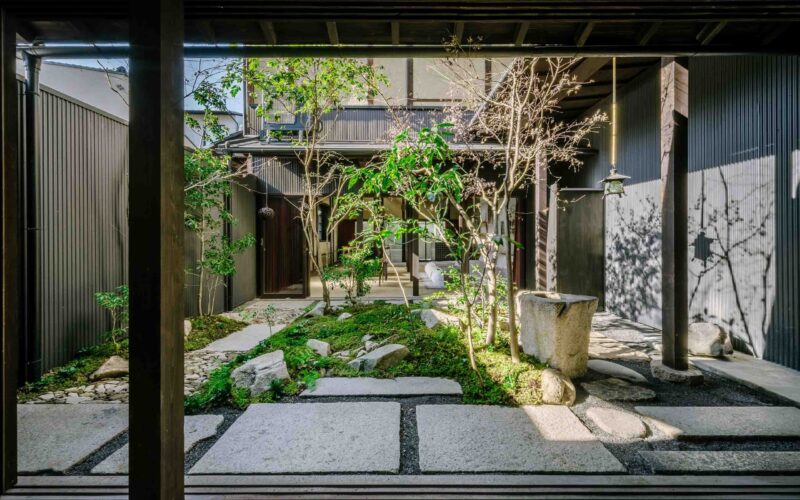
The misenoma also worked as a buffer. Visitors and customers were received here, but only invited guests continued deeper into the house. This gradual shift from public to private, from the busy street to the quiet garden at the back, is central to what makes a machiya house a machiya.
Changing with the Seasons
Because it was visible from the street, the misenoma doubled as a stage. Families dressed it for the season with a hanging scroll, seasonal flowers, or a folding screen. The best-known example comes during Kyoto’s Gion Matsuri in July, when many townhouse families open their front rooms and display treasured folding screens (byobu) and heirlooms to the street, a custom known as Byobu Matsuri. For a few evenings, the private wealth of the neighborhood becomes a public exhibition.
The Misenoma Today
Few machiya still sell kimono fabric or sake from the front room, but the space has found new roles as an entrance lounge, gallery, or tatami sitting room, where you can sit quietly and watch the street through the lattice, seeing out while passersby cannot easily see in.
Experiencing a Misenoma
For a chance to experience the culture, history, and tradition of Japan during your travels, stay in a traditional Japanese machiya house or boutique hotel with MACHIYA INNS & HOTELS.
With over 100 accommodations in Kyoto, Kanazawa, and Takayama, MACHIYA INNS & HOTELS offers travelers the opportunity to experience traditional Japanese machiya architecture and culture through private machiya house rentals and boutique machiya hotels.

Explore our accommodations and book your stay through the MACHIYA INNS & HOTELS official website for exclusive offers and our best available rate.