Kyoto is home to some of Japan’s most beautiful traditional gardens, ranging from expansive pond gardens with seasonal flowers to minimalist Zen rock gardens designed for quiet reflection. While famous spots like Arashiyama and Kinkaku-ji attract large crowds, there are still many less crowded gardens in Kyoto where you can experience these landscapes at a more relaxed pace.
These gardens are worth visiting year-round, from cherry blossom season in spring to vibrant autumn foliage and the fresh greenery of early summer. In this guide, we share some of the best less crowded and local Japanese gardens in Kyoto, selected by our team on the ground.
These recommendations come directly from the Kyoto team at MACHIYA INNS & HOTELS, based on places we regularly visit and suggest to our guests. If you are also interested in Japan’s most iconic landscapes, you can read more about the unofficially recognized Three Great Gardens of Japan here.
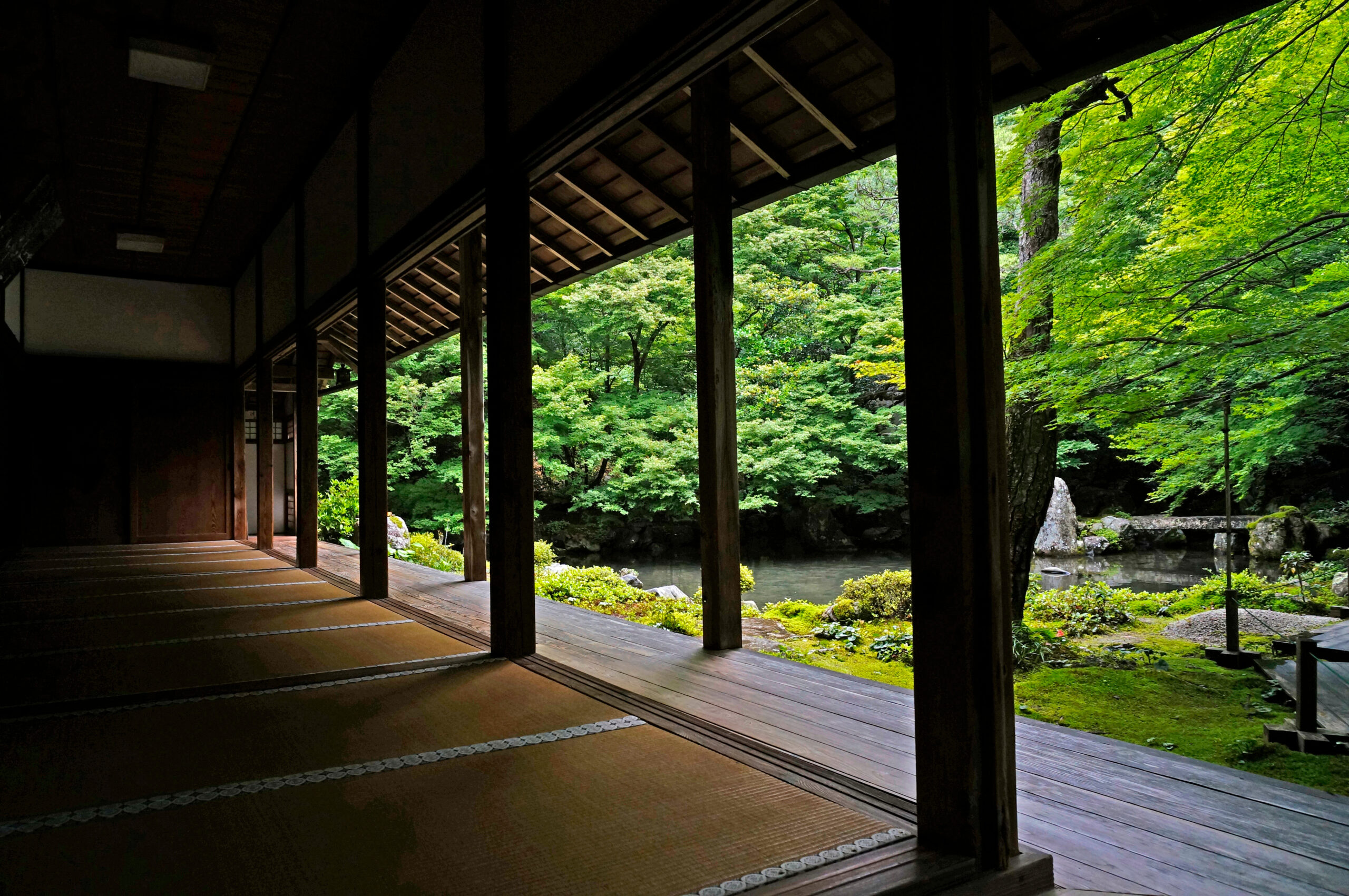
Renge-ji Temple is a Tendai sect temple that was relocated and rebuilt in 1662 by Imaeda Chikayoshi. The garden was added at the time of rebuilding, and now both sit in harmony at the foot of Mount Saimyoji. It’s a small, cozy garden that you’ll want to enjoy by sitting and observing, but it’s well worth the visit. The gate is located on a side alley, but you’ll know you’re in the right place by the 300 stone Buddhas on its left side!
You won’t need much time to explore the temple grounds (an hour is sufficient), so we suggest walking the Hiezan trail or visiting the Shugakuin Imperial Villa on the same day.
We particularly recommend visiting in the summer (for its lush greenery) and autumn (for its famous foliage!).
Address: 1 Kamitakano Hachimancho, Sakyo Ward, Kyoto City, Kyoto Prefecture
How to get there:
7-minute walk from Miyakehachiman Station on the Eizan Electric Railway
A short walk from “Kamihashi” bus stop on the Kyoto Bus
Hours: 9:00 – 17:00
Entrance Fee: 500 yen
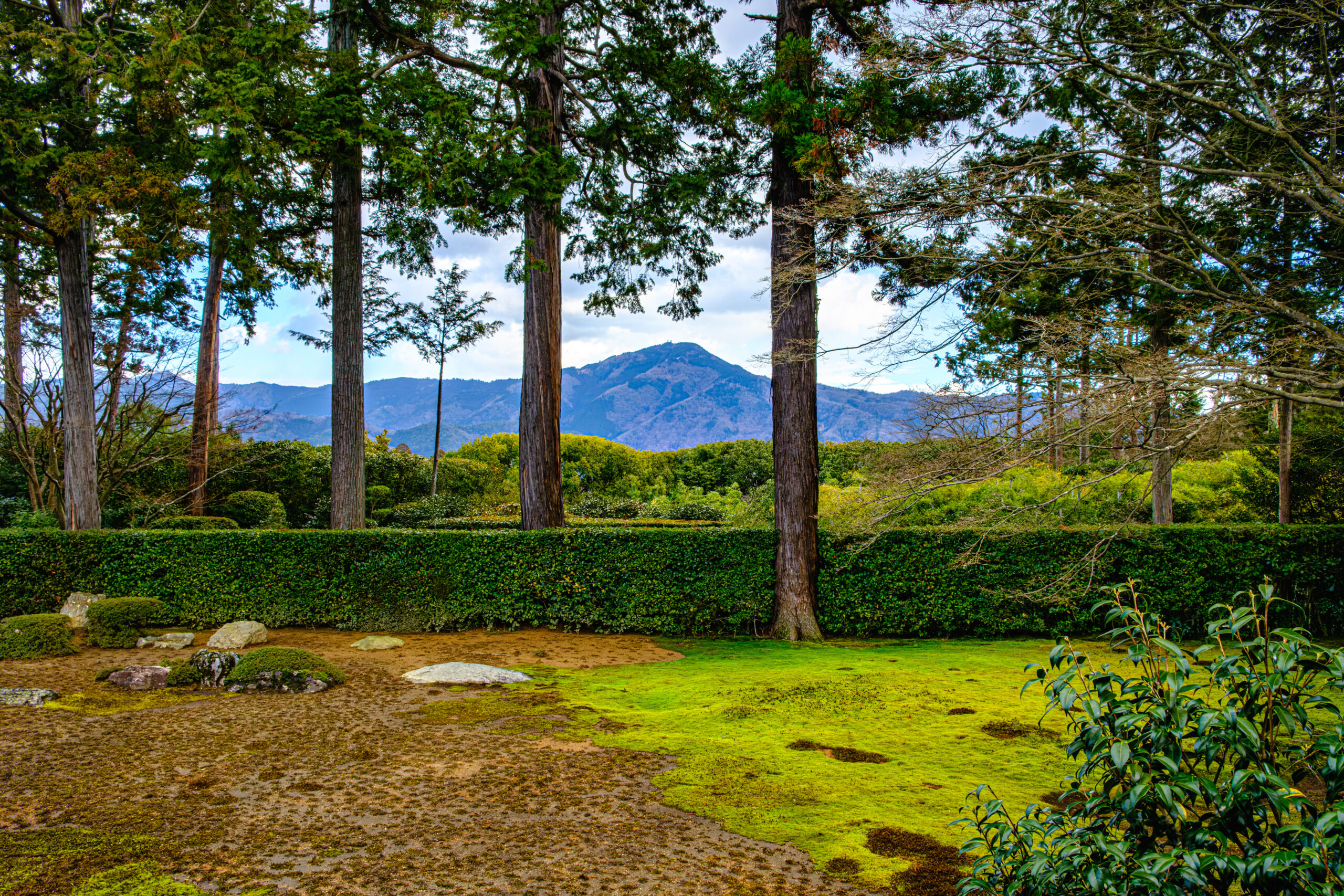
Entsuji Temple and its famous garden are located in northern Kyoto, with scenic Mount Hiei as a backdrop. While less readily accessible by public transportation (the nearest train station is about a 17-minute walk away), this makes it a nice escape from the city’s crowded sightseeing spots. It was founded in 1687 by Emperor Reigen.
Entsuji Temple uses the shakkei or “borrowed landscape” technique. For example, the garden’s maple and cypress trees strategically frame stunning views of the mountains beyond. Within the garden itself, there are over 50 types of camellia flowers and carpets of bright green moss.
It’s important to note that photography of the buildings is not permitted—although you can take pictures of the garden from inside the buildings, and of course of the garden itself. Just be mindful of any warning signs you see posted around when you visit.
Address: 389 Hataedacho, Sakyo-ku, Kyoto City, Kyoto Prefecture
How to get there:
15-minute walk from Kyoto-Seikadaimae Station on the Eizan Electric Railway
8-minute walk from “Entsuji-mae” bus stop on the Kyoto Bus
Hours:
10:00 – 16:30 (April-November)
10:00 – 16:00 (December-March)
Entrance Fee: 500 yen (adult) 300 yen (jr/sr high school student)
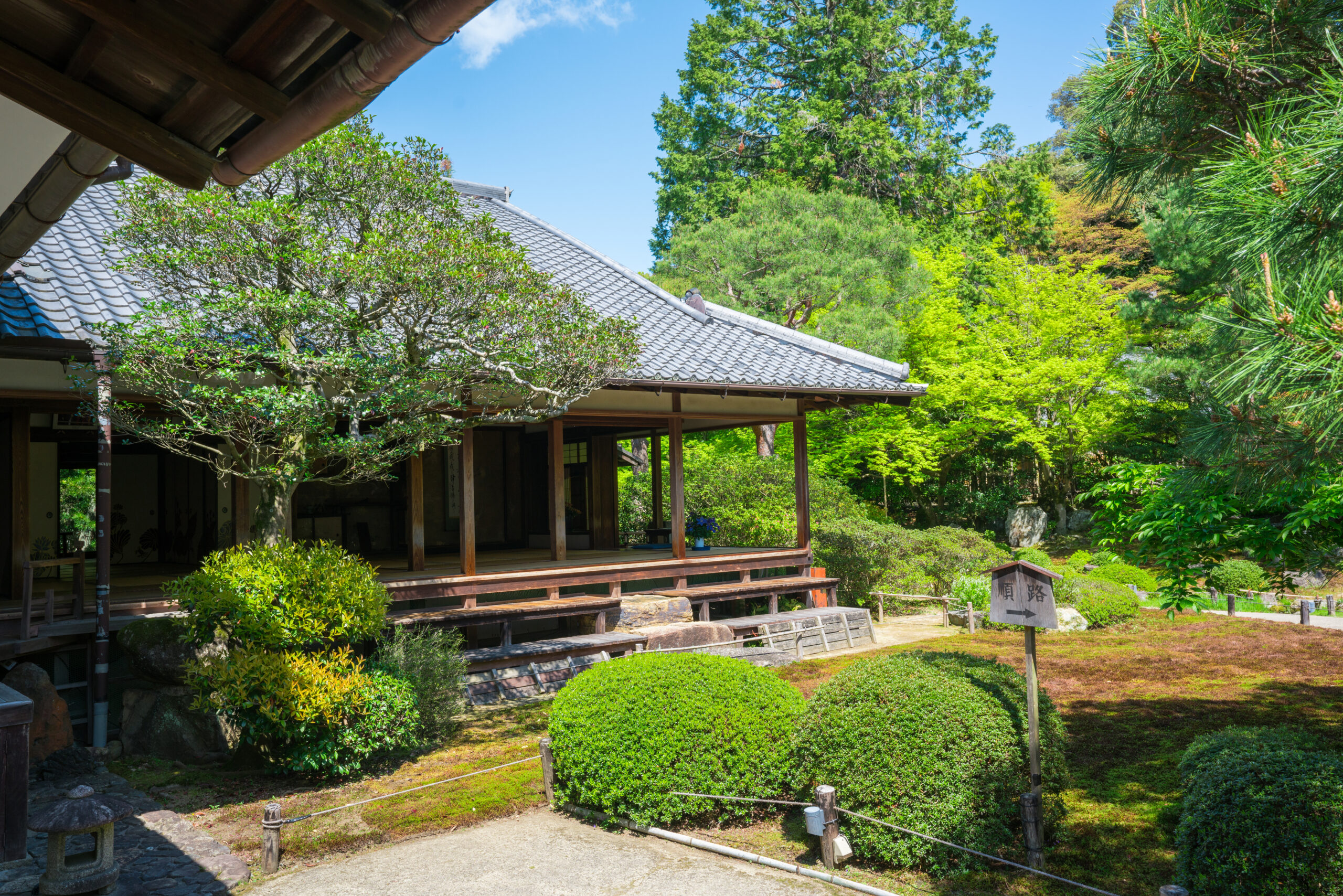
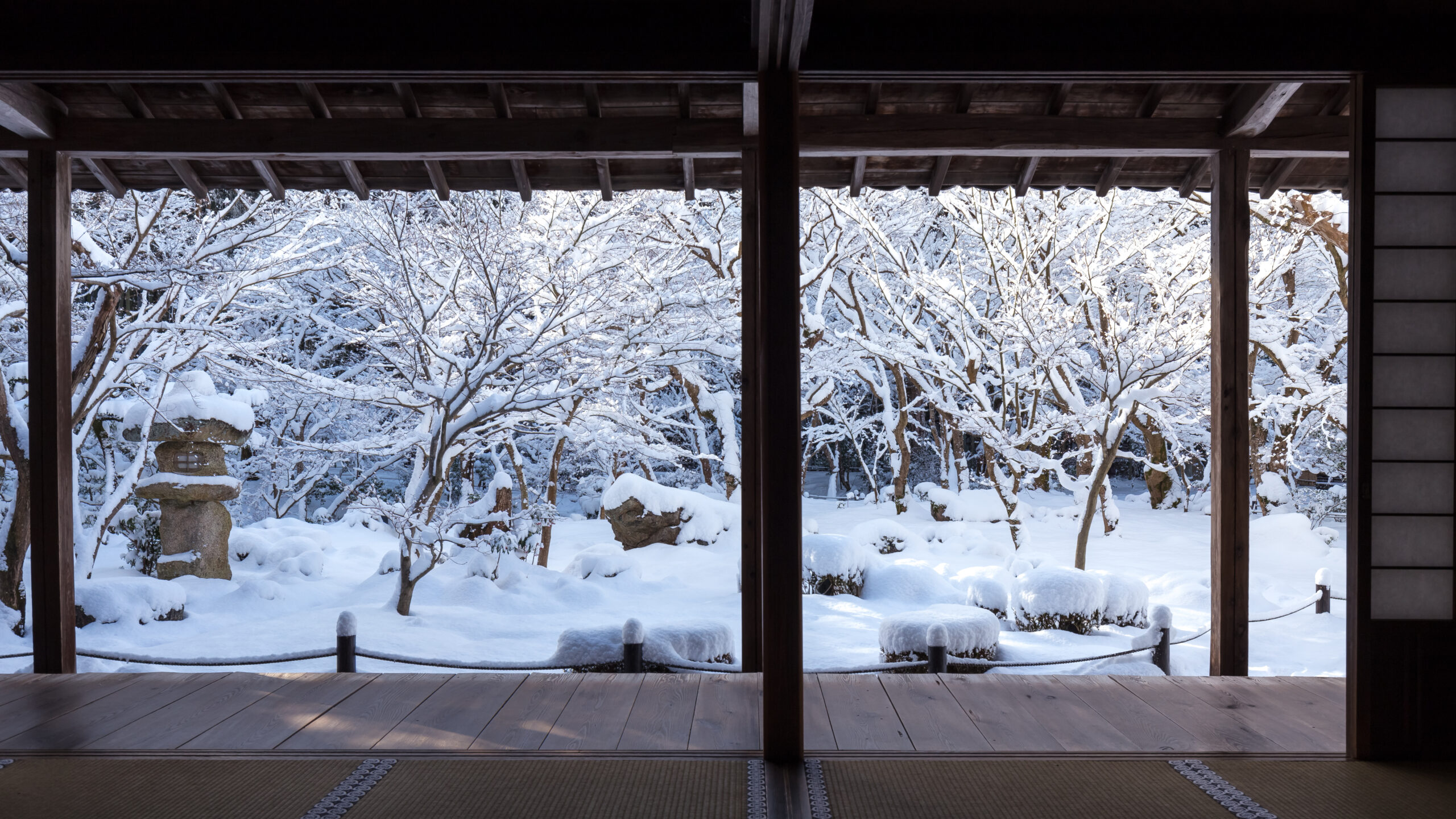
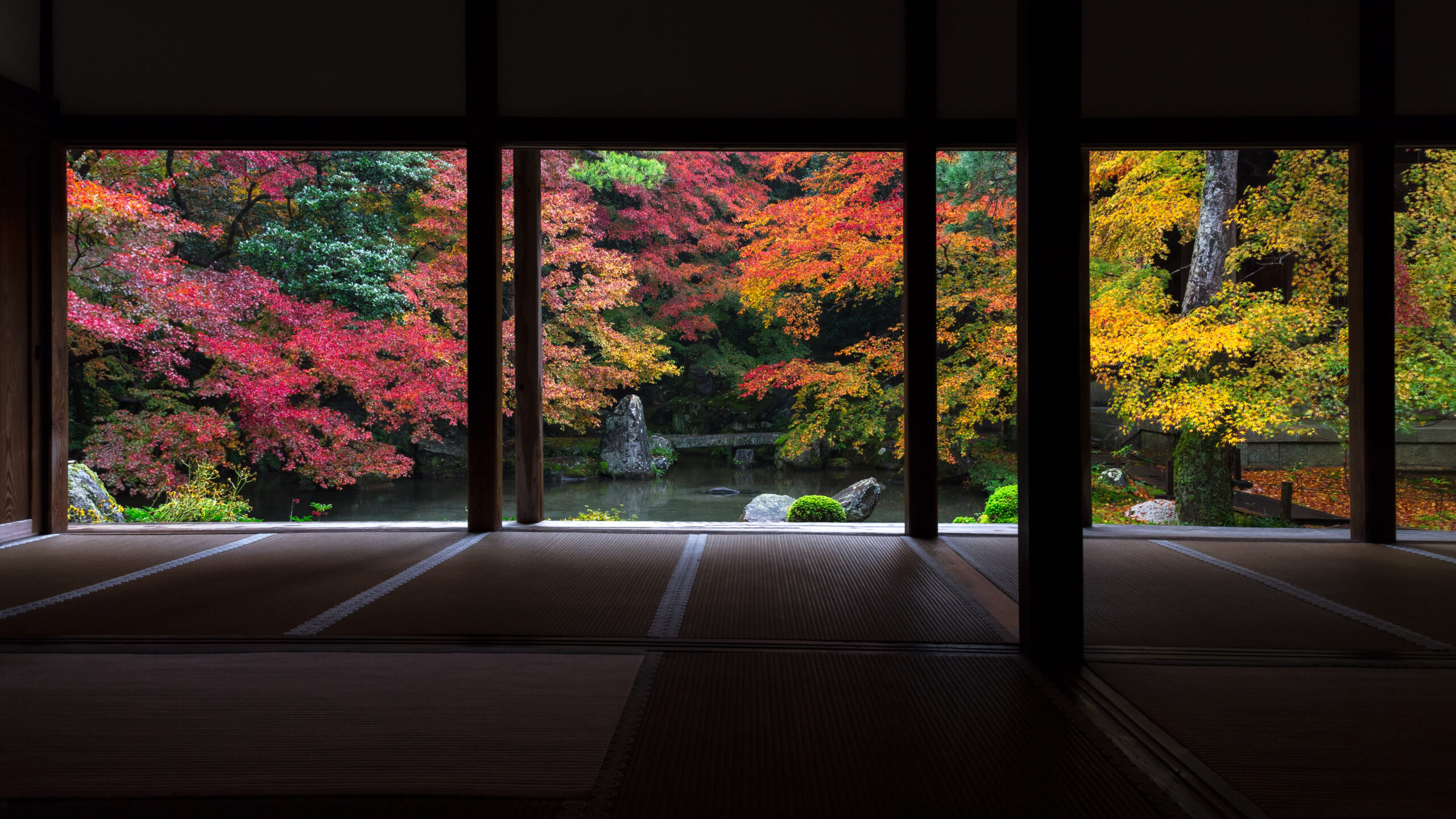
Visiting on a Sunday? If you make a reservation in advance, you can join the Sunday morning zen meditation from 6am-8am! Originally, Enjitsu Temple was built as a public educational institute by Shogun Ieyasu Tokugawa in 1610, where both samurai and monks learned Confucianism. Now, it’s most famous for being a “framed garden” (額縁庭園gakuen teien) where the wooden pillars create a “picture frame” for viewing.
The sizeable garden has a variety of differently styled sections. One area called the “Ten Cows Garden” features overlapping Japanese maple trees, bamboo, and moss-covered rocks, and creates a feeling of full immersion in nature: deep green in summer, and a kaleidoscope of red, yellow, and orange leaves in autumn. You can enjoy it from the viewing area as well as taking a stroll along the path, all the way to the towering bamboo forest.
We also recommend the Dragon Garden, a rock garden where large, black boulders sit amid geometric designs drawn in the sand, symbolizing a dragon’s horns and coiling body!
Address: 13 Otari-cho, Ichijoji, Sakyo-ku, Kyoto City, Kyoto Prefecture
How to get there: 17-minute walk from Ichijoji Station on the Eizan Electric Railway
Hours: 9:00 – 17:00
Entrance Fee: 600 yen (adult) 300 yen (elementary/jr high school student)
**Phone: +81-75-781-8025 (for Sunday Zen Meditation reservations)
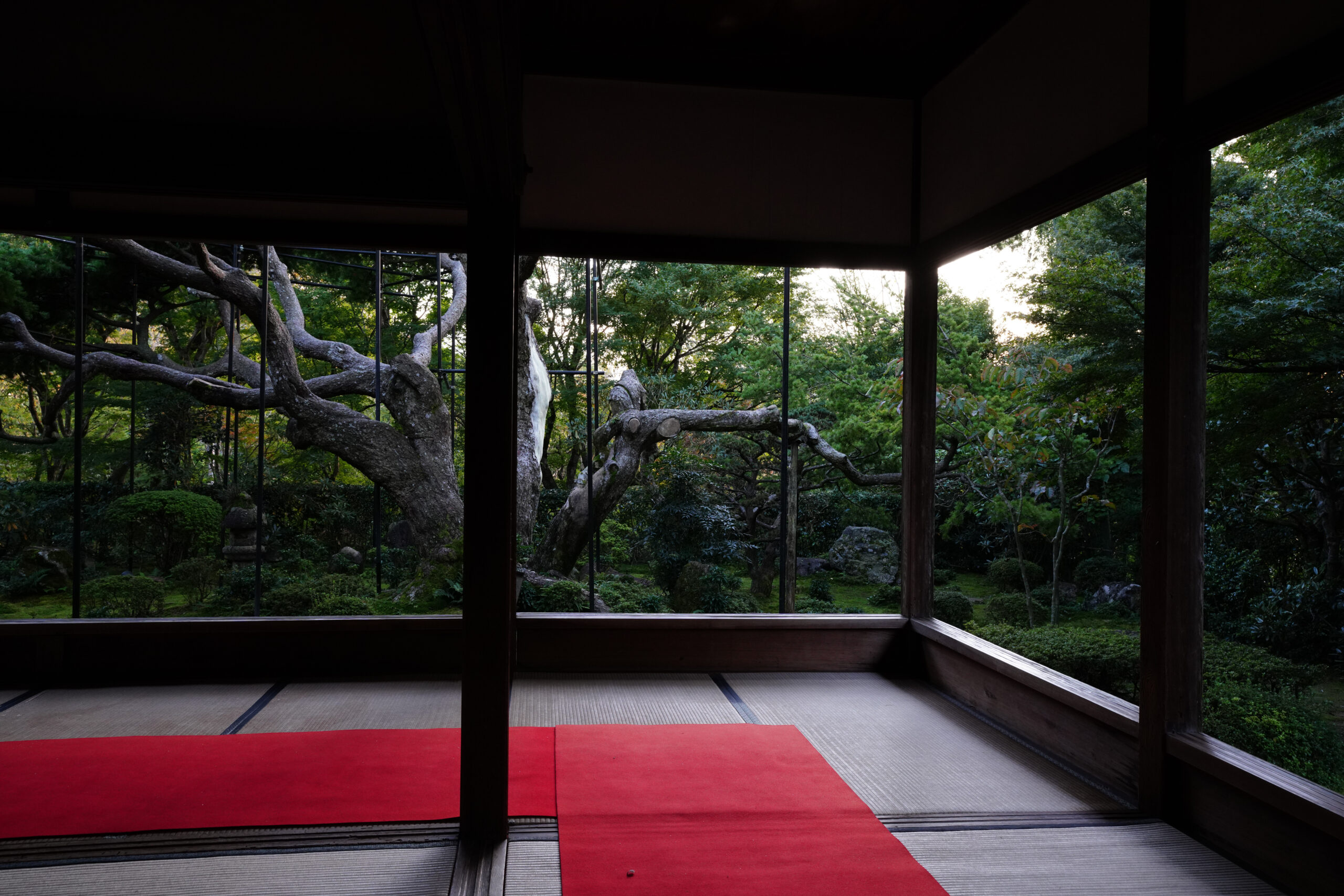
Hosen-in Temple is one of our favorites temples in Kyoto, and one of the best places to visit to enjoy the seasons. Its two beautiful gardens include a variety of trees (including Japanese cherry blossoms), a bamboo grove, and a pine tree over 700 years old! In spring, flowers bloom on the trees and shrubs. In summer, the entire landscape is overtaken with deep green. In autumn, the leaves of Japanese maples turn brilliant red and orange. And in winter, snowfall creates stark and arresting contrasts of dark and light across the rocks and bare branches.
Built during the Heian Period in 1013, it served as lodging for the priests and visitors of nearby Shorin-in Temple. You might be surprised to learn that part of its ceiling is constructed from blood-stained wooden floorboards! These floorboards were taken from Fushimi Castle after its last defenders committed ritual suicide in 1600, and then shared among other temples so that prayers could be offered for the souls of the departed warriors.
Traditional matcha tea and a wagashi sweet are served to visitors in the reception hall, where you’ll sit on the tatami floor. Traditional matcha tea has a rich, frothy texture and is more bitter than people expect! Sip it slowly while you enjoy the calming garden view.
Did You Know? Samurai in Japan used green tea in their zen training. Not for its calming effects, but because the caffeine kept them awake! Zen was all about divesting oneself of earthly desires, including the desire for sleep. Read more about samurai and shogun in Japan, and our recommended sightseeing spots to get up-close and personal with authentic samurai history!
Address: 187 Ohara Shorin-in-cho, Sakyo-ku, Kyoto Prefecture
How to get there: 10-minute walk from “Ohara” bus stop on the Kyoto Bus
Hours: 9:00 – 17:00 (reception closes at 16:30)
Entrance Fee:
800 yen (adult) 700 yen (jr/sr high school student) 600 yen (elementary school student)
** Matcha tea is included in the admission fee
Gio-ji Temple is a “lesser known” hidden moss temple in Kyoto! Come here to avoid the crowds and enjoy a peaceful afternoon after visiting the Arashiyama Bamboo forests. It’s a quiet, modest place with dense trees providing lots of shade, and thus a perfect place of zen to add to any traveler’s itinerary.
Gio-ji features a sprawling moss garden, a bamboo forest, water chimes, green Japanese maple trees whose leaves turn bright red in autumn, and an altar room with several Buddhist statues. The temple itself is named after Gio, a dancer in the Heian period who fell out of favor with the court noble Kiomori and ran away to become a nun. You’ll certainly feel hidden from the world here!
Important!
Address: 32 Sagatoriimoto Kosakacho, Ukyo Ward, Kyoto City, Kyoto Prefecture
How to get there:
25-minute walk from Saga-Arashiyama Station on the JR Sanin Main Line (aka Sagano Line)
15-minute walk from “Saga Shakado-mae (Seiryoji Temple)” bus stop on the Kyoto Bus
Hours: 9:00 – 16:30
Entrance Fee:
Gio-ji Temple
300 yen (adult) 100 yen (elementary/jr/sr high school student)
** Present your Japanese disability certificate for a discount/admission exemption
Gio-ji Temple & Daikaku-ji Temple Hall Area only (combined admission)
600 yen (adult ticket only)


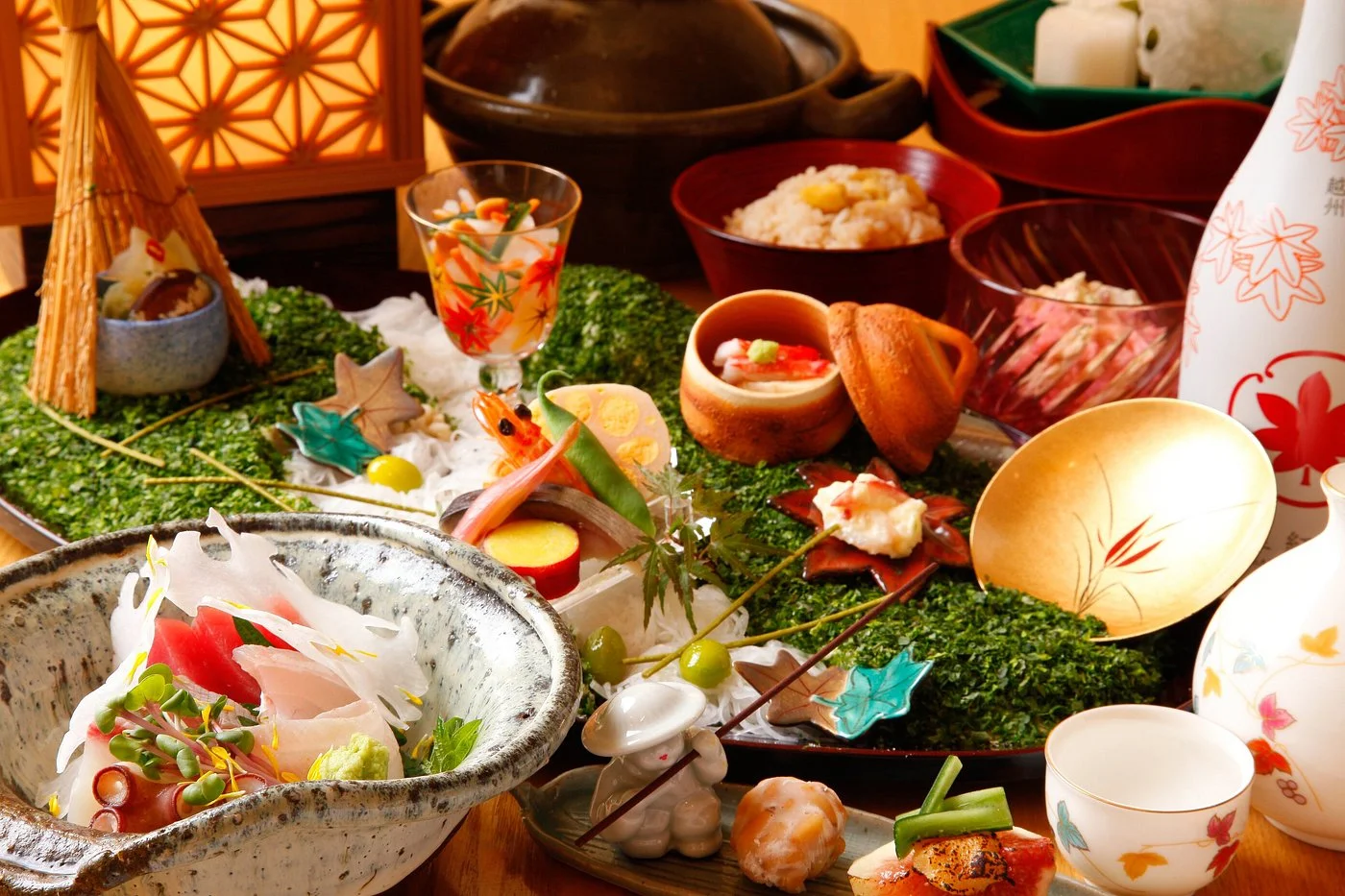
Experience authentic Japanese cuisine at the best restaurants in Japan as recommended by locals.
Book a table at top-rated restaurants to enjoy exquisite kaiseki (course-style) Japanese dinners.


 ×
×